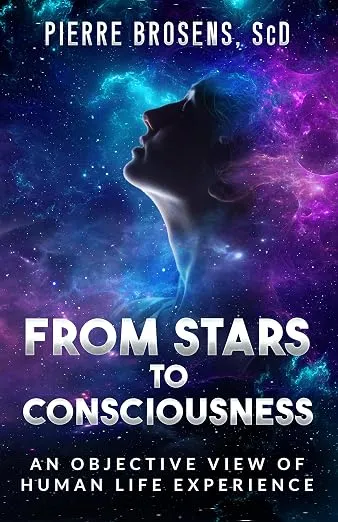
Pierre Brosens, ScD
From Stars to
Consciousness
An objective view of human life experience — one unbroken physical chain from the early universe to the moment a person becomes aware of being a person.
- Nothing was added that physics can't reach
- Hydrogen, then stars, then chemistry, then you
- Experience does not switch on — it fades in
- A book for scientists, readable by anyone
- Nothing was added that physics can't reach
- Hydrogen, then stars, then chemistry, then you
- Experience does not switch on — it fades in
- A book for scientists, readable by anyone
- Nothing was added that physics can't reach
- Hydrogen, then stars, then chemistry, then you
- Experience does not switch on — it fades in
- A book for scientists, readable by anyone
- Nothing was added that physics can't reach
- Hydrogen, then stars, then chemistry, then you
- Experience does not switch on — it fades in
- A book for scientists, readable by anyone
Six links, no gaps
Each step is ordinary physics.
Together they make a thing that asks what it is.
• 1
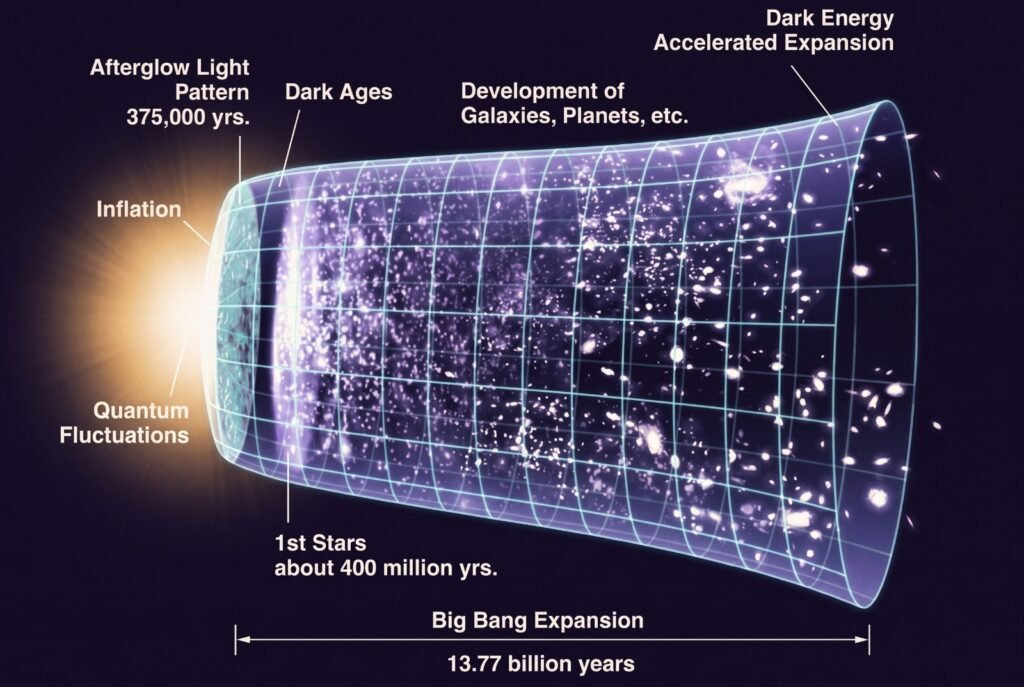
The whole span, in one frame
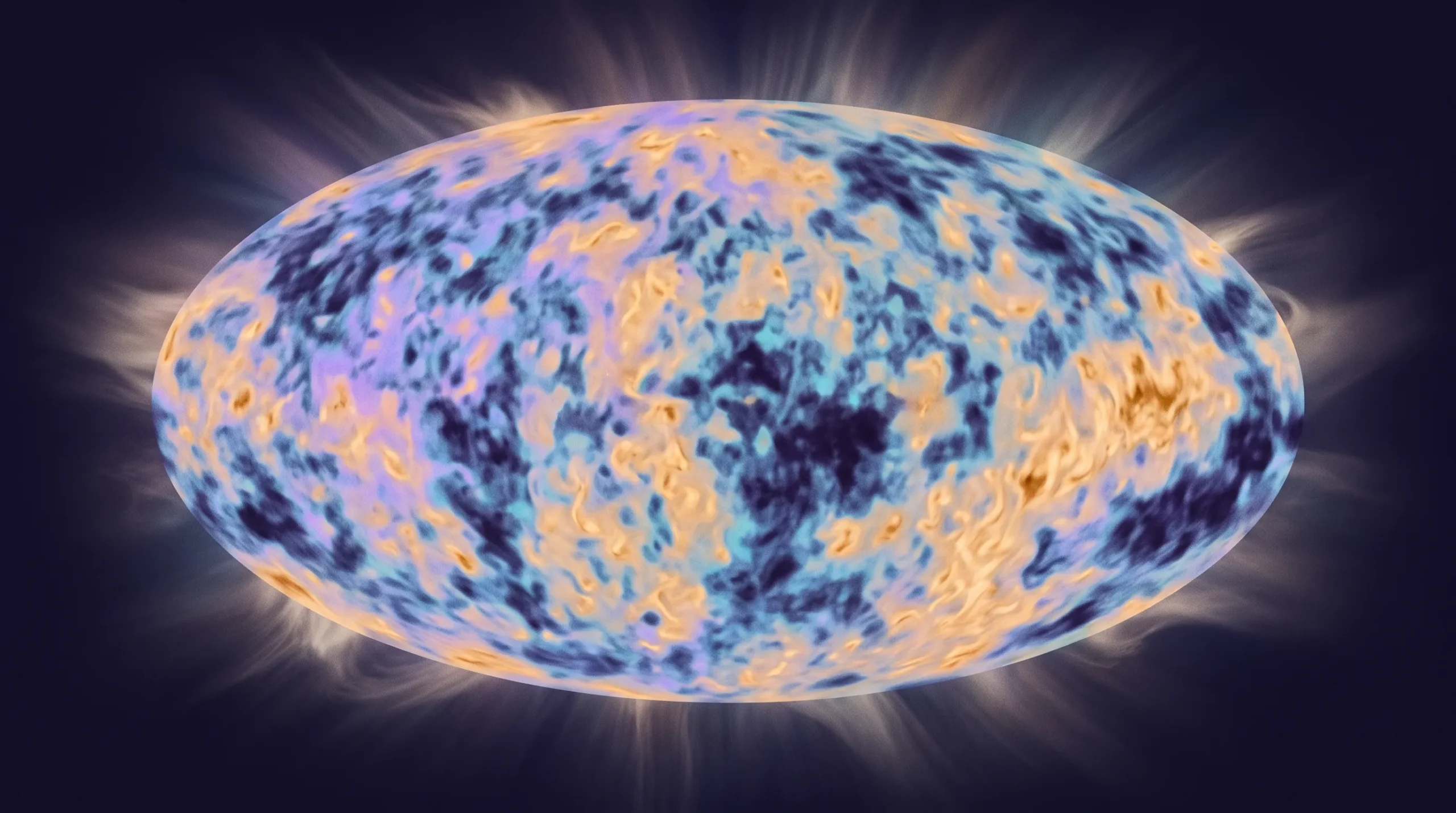
Everything the book covers sits inside this diagram. An opaque plasma cools until light escapes for the first time at 375,000 years — the afterglow we still measure today. Stars don’t switch on for another 400 million. At this point the universe holds hydrogen, helium, and nothing else worth mentioning. None of the heavier elements from which a human body would eventually be built exists yet.
• 2
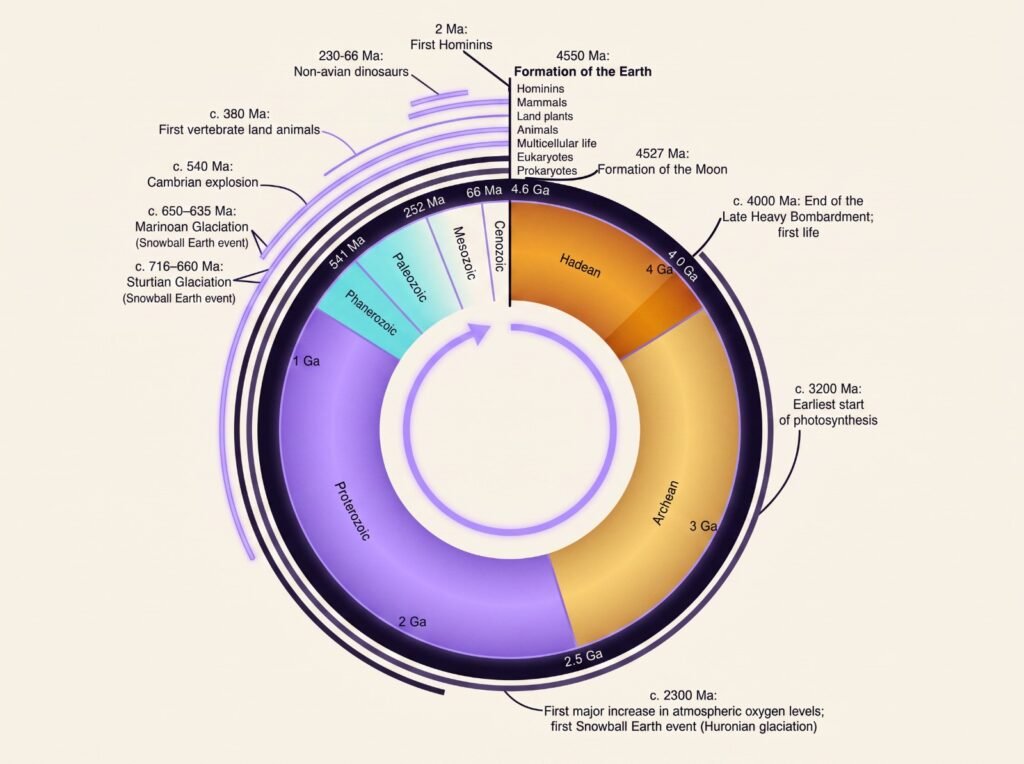
Earth keeps the receipts
• 3
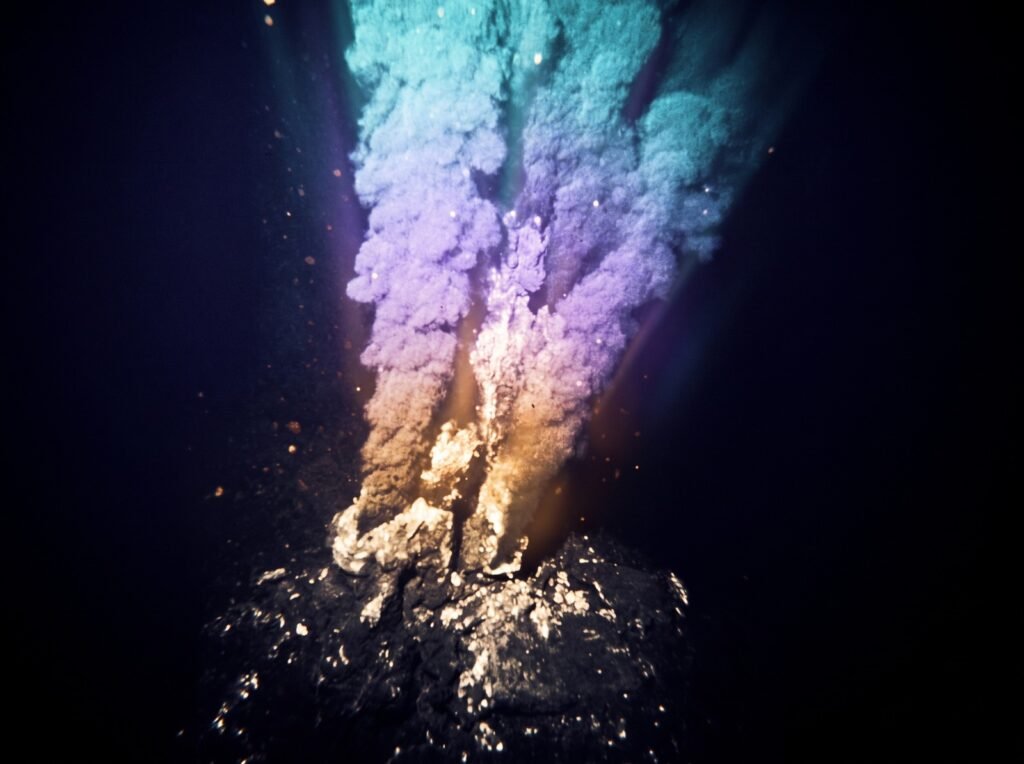
Chemistry finds a way to copy itself
• 4
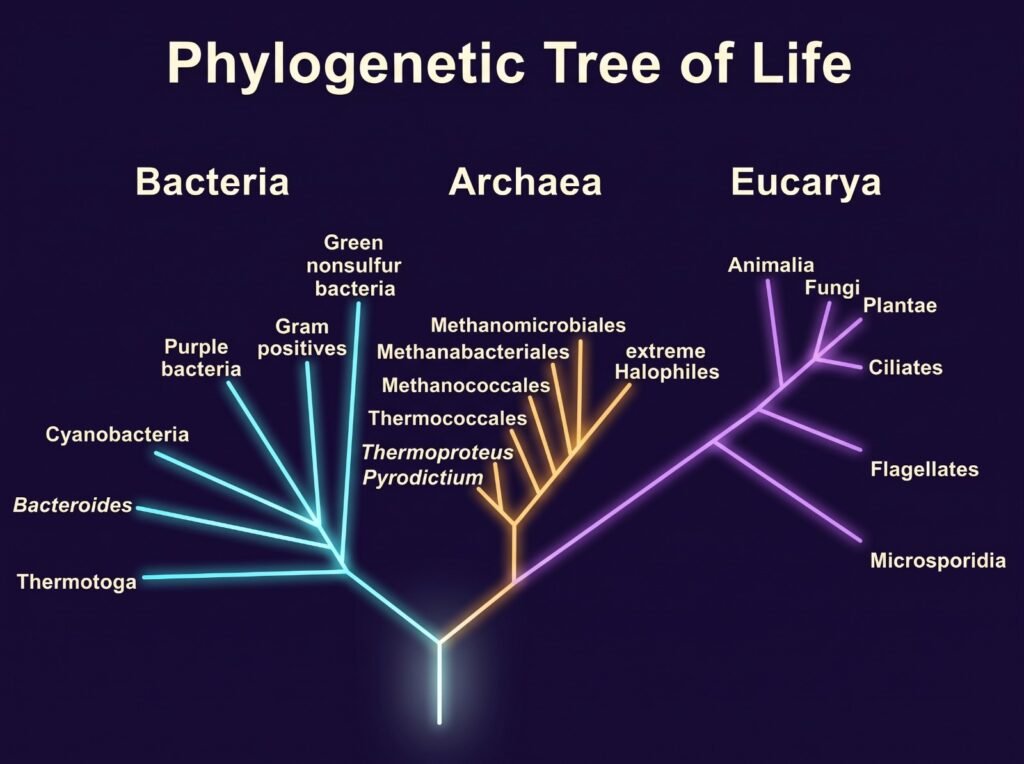
One family, no exceptions
• 5
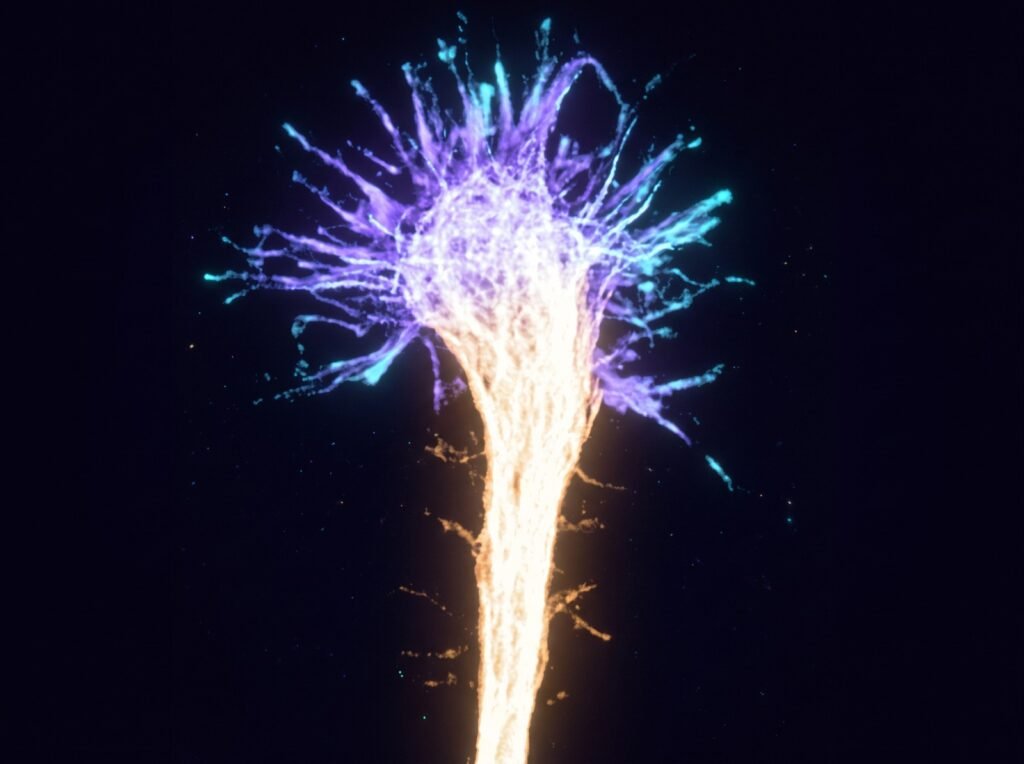
A brain wires itself in the dark
• 6
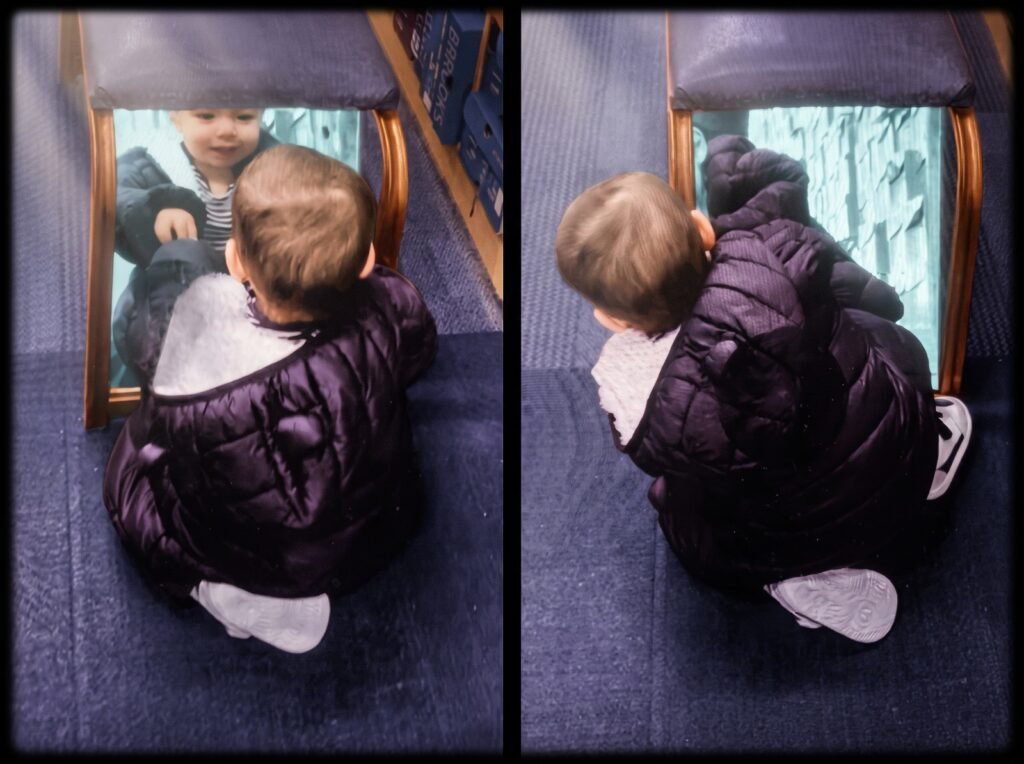
Someone recognises themselves
You are made of atoms that were
assembled inside stars. So is your
experience of reading this.
for something extra — a spark, a field, a mystery. This book
doesn’t. It follows one continuous physical chain from the early
universe to the moment a person becomes aware of being a
person, and shows that no link in it is missing.
then narrows to the part that is actually yours: how a human
mind is built in the womb, wired in childhood, and finished in
adolescence, when identity and purpose settle into place.
Six links,
no gaps
produce a thing that can ask what it is.
•
380,000 yr
after the beginning
The fog clears
For its first few hundred thousand years the universe is an opaque plasma — nuclei and electrons too hot to stay together. Then it cools past a threshold, electrons are captured, the first atoms form, and light travels freely for the first time. Hydrogen and helium, and nothing else worth mentioning. Every ingredient of a person is still missing.
•
200 Myr
after the beginning
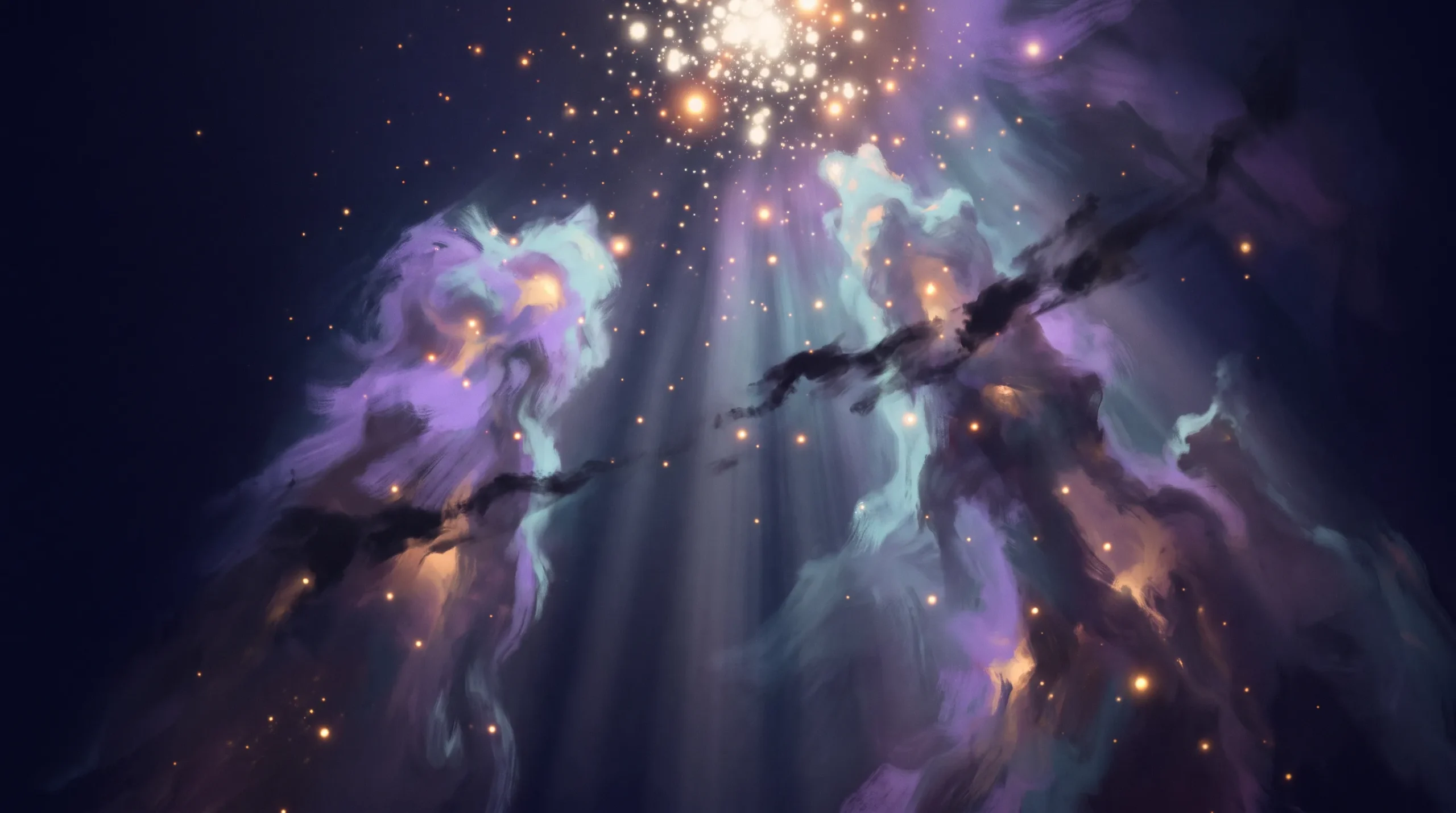
Gravity builds a furnace
Slight unevenness in that gas is enough. Gravity pulls it into knots, the knots heat until fusion starts, and stars begin manufacturing heavier elements by pressing lighter ones together. Carbon, oxygen, nitrogen, iron. When the largest stars fail, they scatter the output across space. The periodic table is a by-product of stellar accounting.
•
9.2 Gyr
chemistry turns reflexive
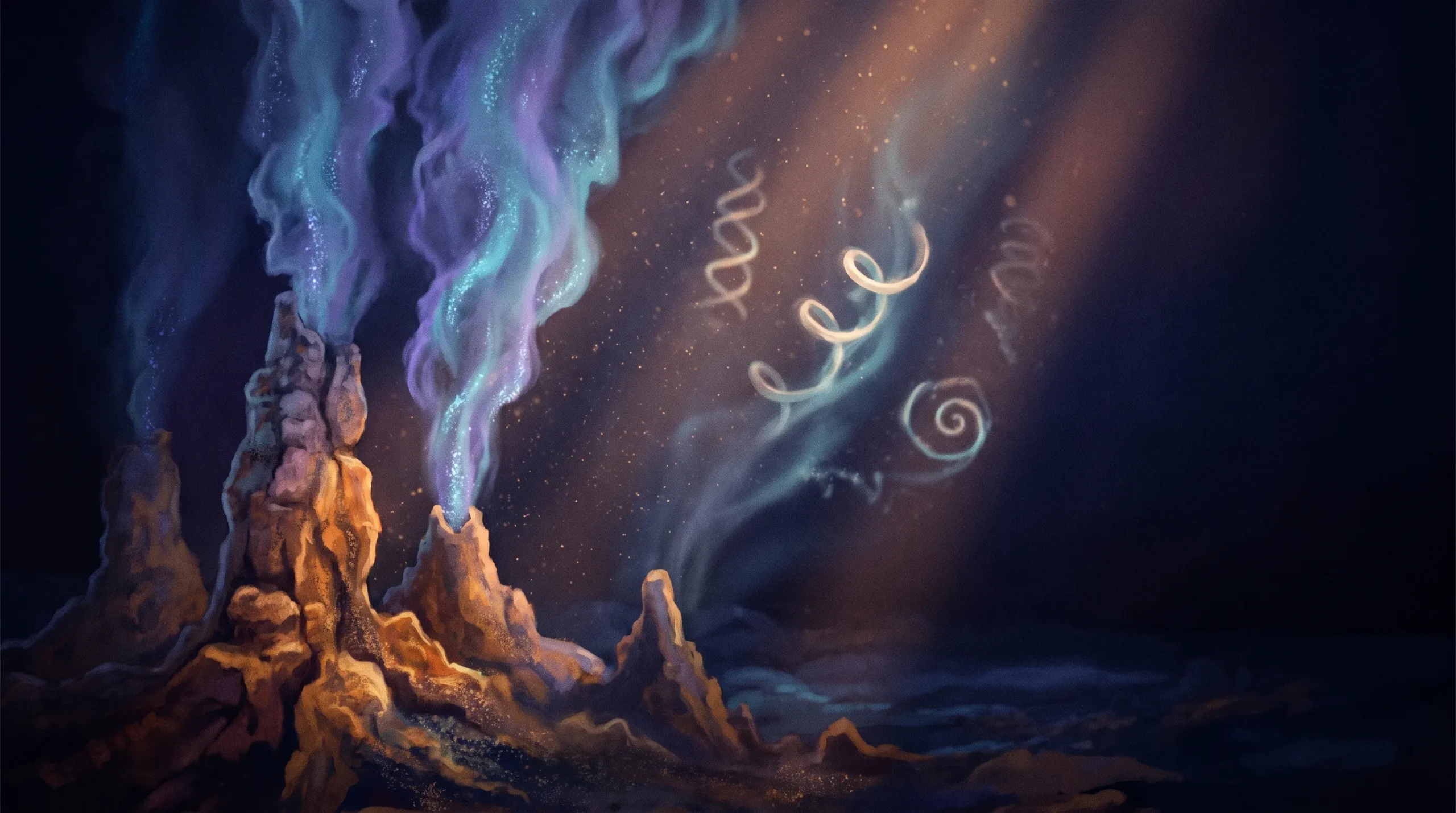
Matter starts copying itself
Earth condenses out of that enriched debris. Given water, energy and a few hundred million years, chemistry finds arrangements that reproduce themselves with small errors. Selection does the rest. Life is not an addition to physics here — it is what certain chemistry does when it is left running long enough.
•
13.2 Gyr
nervous systems
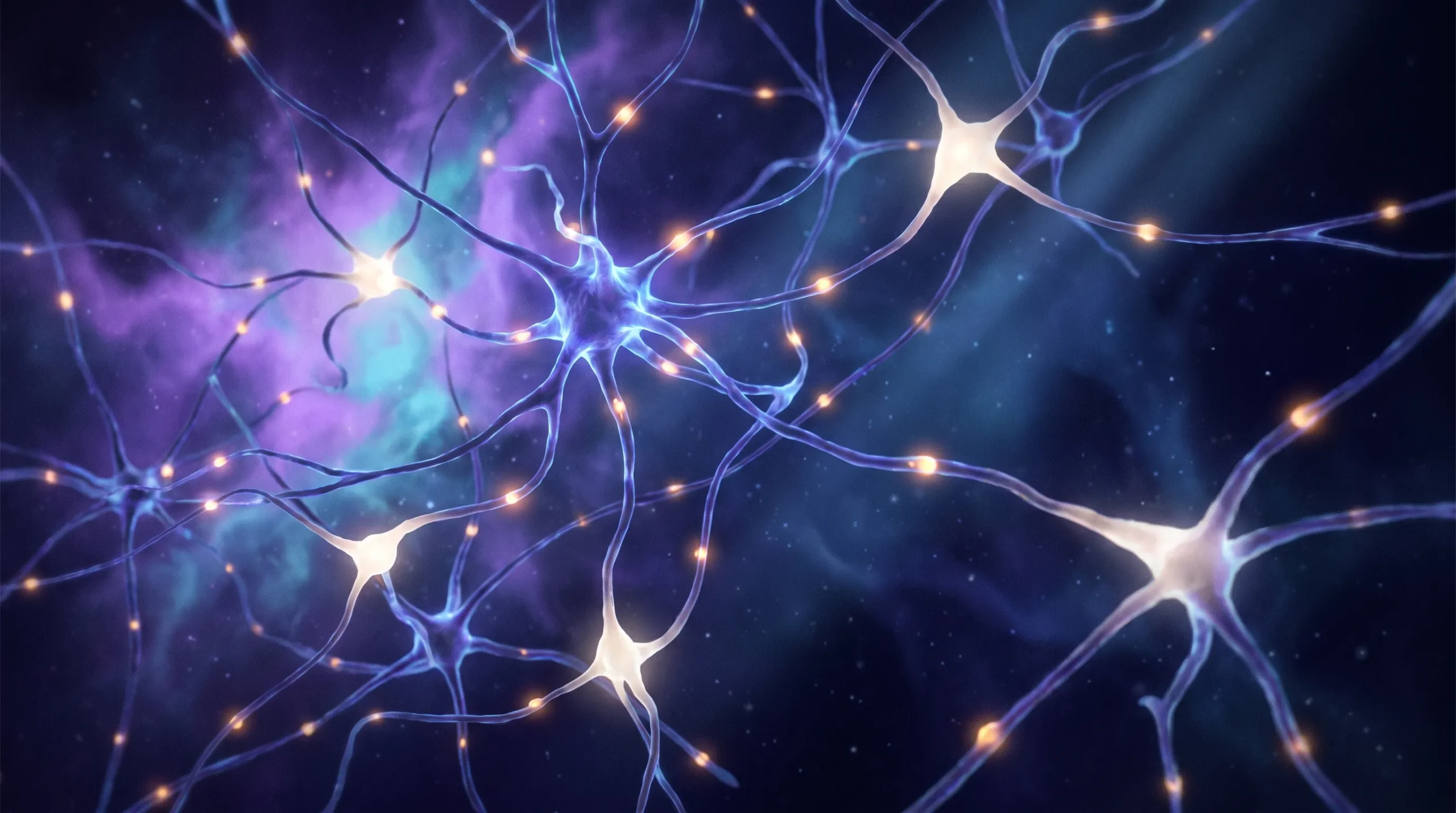
Prediction pays
Organisms that model what happens next survive better than those that only react. Nerve cells become networks, networks become brains, and brains get expensive — a fifth of your energy for three pounds of tissue. That cost is worth paying for exactly one product: an internal model of the world, updated in real time, with the organism represented inside it.
•
9 months
the private build
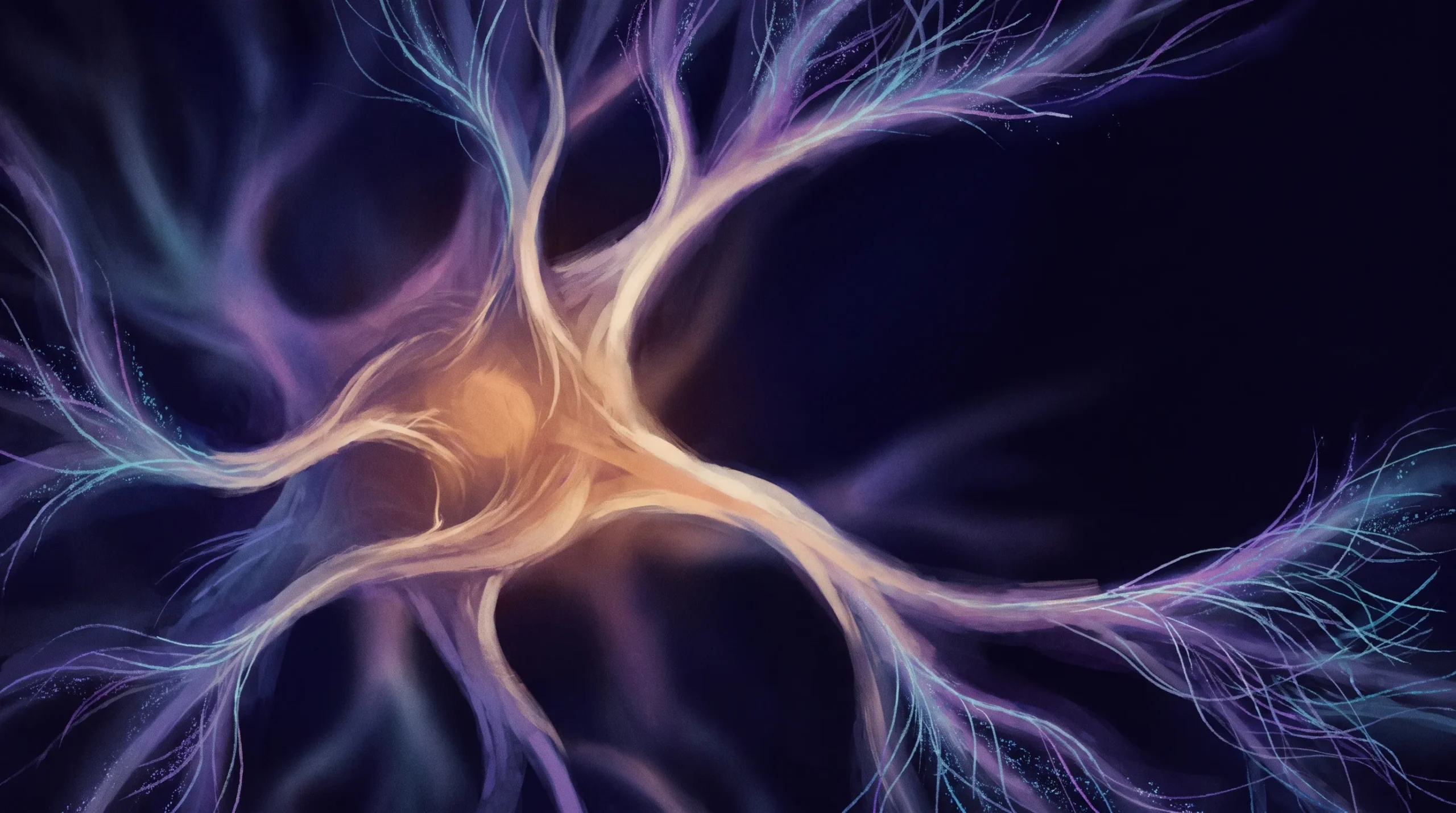
A brain assembles in the dark
Yours was built without instructions from the outside world, at a peak rate of roughly a quarter of a million neurons a minute, on a genetic plan and a chemical gradient. Before birth it is already firing, already wiring itself in response to its own activity. Experience does not switch on at delivery. It fades in.
•
0 – 18 yr
a self settles
Someone shows up
Childhood adds language, memory and a durable model of other minds. Adolescence prunes hard, keeping the connections that get used and discarding the rest — and out of that pruning come the two things people spend the rest of their lives defending: an identity, and a sense of what it is for. Nothing mystical was added at any point. Something enormous was still produced.
Read the opening
The Sun and night sky have occupied the human imagination for
millennia. Babylonian records of the stars date back more than five thousand years, and archaeological monuments such as the Great Pyramid of Giza and Stonehenge, which are nearly five thousand years old, were meticulously aligned with the positions of celestial objects at various times of the year, reflecting mystical beliefs of the era.
Until the sixteenth century, it was widely accepted that either the Sun or the Earth was at the center of the universe, with planets moving on composite orbits having immutable stars on an outer celestial sphere. This belief was falsified in 1572 when astronomer Tycho Brahe observed a supernova, which demonstrated stars not to be immutable. It was further falsified by Galileo’s invention of the telescope in 1607, with which he discovered that the moons of Jupiter do not revolve around the Sun.
We remain entranced by the night sky to this day, but in modern times, we cast our gaze even farther across space—and further back in time.
Chapter one · A universe with no ingredients
Reader question
Could an artificial system ever have real
subjective experience?
Tap an answer · results are illustrative until the poll is wired up
THE BOOK
From Stars to
Consciousness
A concise, scientifically grounded account of how conscious experience arises from the physical world. It connects the dots from the early universe to the evolution of brains, then focuses on how human consciousness actually develops — from the womb through childhood into adolescence, when identity and purpose take shape.
Readers come away with a clear, non-mystical understanding of consciousness as a physical process, and a view of their own life under a new light.
Paperback
FORMAT
Add pages
EXTENT
Add ISBN
ISBN-13
Science
CATEGORY
About Pierre
The argument,
not the atmosphere
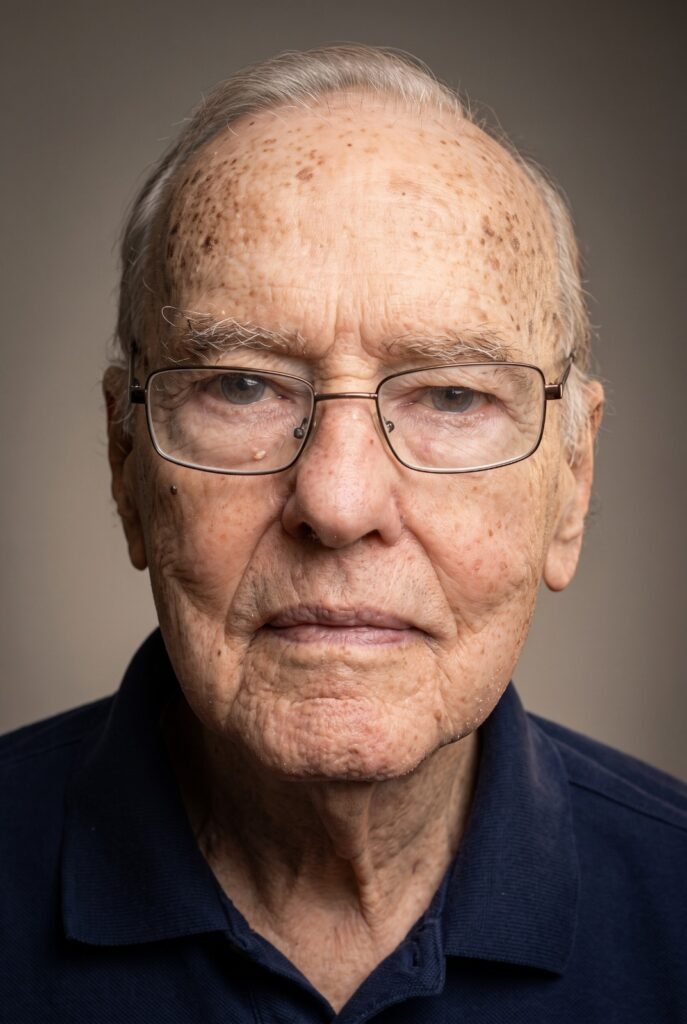
I write about the physical basis of mind for readers who want the reasoning rather than the mood music. My training is in the physical sciences, and the discipline shows: I make claims where the evidence carries them, and I name the gaps that remain as gaps.
This book grew out of a simple frustration — that the story of how we got here is usually told in pieces, by specialists, to each other. Told end to end, it turns out to be one story, and a legible one.
Pierre Brosens
From the readers
“A book I will want to,
and need to, go back to”
A very readable and enjoyable book. As a physics professor I was impressed by the way the author sticks to scientific facts and logic in building the case for the development of today’s physical world and, ultimately, human consciousness. I delighted in the parts that I thought I knew but still had something to learn about.
— Erich Ippen · Professor of Physics
This fascinating book is a journey, using scientific evidence developed over many years, from the Big Bang Theory to consciousness. It presents difficult concepts in science and philosophy in a simple enough way that non scientists can understand and enjoy
anonymous
Highly recommend – this is a fascinating read. It takes you on a journey through the biggest scientific discoveries in our natural world and human development and weaves them together concisely to explore and explain consciousness in a way never done before. Grounded, accessible, and thoughtfully concise – it makes for a quick, engaging read despite the breadth of topics.
Maya Reti
A very readable and enjoyable book. As a physics professor I was impressed by the way the author sticks to scientific facts and logic in building the case for the development of today’s physical world and, ultimately, human consciousness. I delighted in the parts that I thought I knew but still had something to learn about.
— Erich Ippen · Professor of Physics
This fascinating book is a journey, using scientific evidence developed over many years, from the Big Bang Theory to consciousness. It presents difficult concepts in science and philosophy in a simple enough way that non scientists can understand and enjoy
anonymous
Highly recommend – this is a fascinating read. It takes you on a journey through the biggest scientific discoveries in our natural world and human development and weaves them together concisely to explore and explain consciousness in a way never done before. Grounded, accessible, and thoughtfully concise – it makes for a quick, engaging read despite the breadth of topics.
Maya Reti
Notes
Writing between the books
Add date
What the hard problem is actually asking
The question is sharper than the slogan suggests, and answering the sharp version is more tractable than people assume.

Add date
Why adolescence is the interesting part
Most accounts of development stop at infancy. The self that has to live with itself gets built much later.

Add date
Three tests for machine experience
If consciousness is physical, we can specify what to look for. Here is what I would check, and in what order.